
Driving on the Monash Freeway as a Learner in Berwick: What You Must Know
Driving on the Monash Freeway as a learner from Berwick can feel both exciting and intimidating. It’s one of Melbourne’s busiest highways, and it demands confidence, quick decisions, and strict road rule knowledge.
This guide covers what we consistently see learners struggle with and how to handle it properly before you get out there.
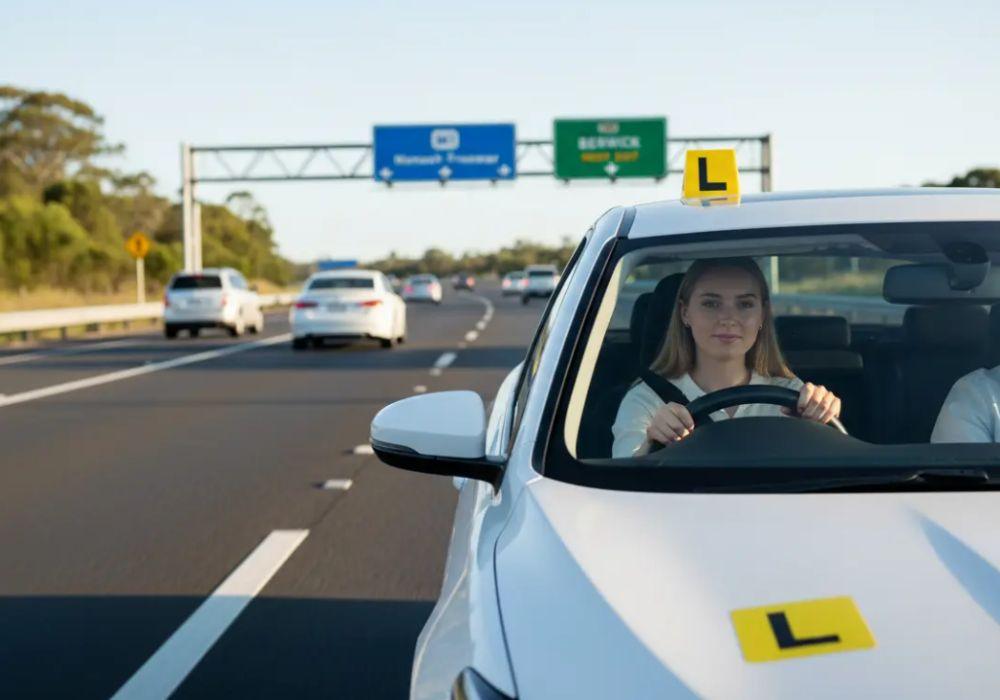
The Freeway Anxiety Nobody Talks About
Freeway anxiety is one of the most common concerns we hear from learner drivers. If you’re getting heart palpitations just thinking about merging into fast traffic or being surrounded by trucks doing 100 km/h, you’re far from alone.
We see the same pattern constantly at driving lessons in Berwick. Learners who are completely fine on suburban streets freeze up at the thought of freeway driving. Some avoid it entirely until after getting their Ps, which actually makes that first solo freeway trip more dangerous, not less.
The anxiety usually comes from feeling trapped. Once you’re on the Monash, you can’t just pull over like you can on Princes Highway. That loss of control triggers panic in otherwise confident learners. Recognising this is the first step to managing it.
What We Tell Every Learner About Their Supervisor
Victorian law requires your supervising driver to hold a full Australian licence and sit beside you. But here’s a critical detail most learners don’t know: your supervisor must be legally allowed to drive right now, not just in theory.
A Narre Warren learner was recently caught doing 226 km/h on the Monash at 3 am. His supervisor was a disqualified driver. Both were charged, and the car was impounded for 30 days at the owner’s expense.
This applies to everyday situations, too. If your supervisor has had their licence suspended for unpaid fines or drink driving, even months ago, they cannot legally supervise you. Both of you can be fined, and you’ll be treated as driving unaccompanied.
Your supervisor also needs a BAC under 0.05. Under Victorian law, they’re considered “in charge of the motor vehicle,” which means drink driving laws apply to them exactly as if they were behind the wheel.
Choosing the Right Entry Point from Berwick
The closest on-ramp from Berwick is at Clyde Road, heading westbound towards the city. It drops you straight into three lanes of fast-moving traffic with minimal run-up space. That makes it a poor choice for your first freeway attempt.
We recommend starting with the Beaconsfield on-ramp heading eastbound towards Pakenham. It’s quieter, especially mid-morning or early afternoon on weekdays. You can build confidence merging, maintaining speed, and checking blind spots without the pressure of peak-hour city-bound traffic.
Once you’re comfortable heading east, loop back and try westbound. The Narre Warren North exit and re-entry also gives you a chance to practice without committing to the full city run immediately.
Speed: What You're Actually Expected to Do
The Monash is signposted at 100 km/h through most sections between Berwick and Chadstone. Unlike NSW, Victorian learners have no separate speed restriction. You can legally drive at whatever the road allows, provided you have L plates displayed and a supervisor beside you.
That said, sitting at 80 km/h in the left lane during light traffic is fine. Sitting at 80 km/h in the right lane during moderate traffic creates a safety issue and will frustrate drivers behind you.
Peak hour between 7 am and 9 am, or 3:30 pm and 7 pm westbound, is genuinely difficult even for experienced drivers. The stop-start flow, aggressive lane changes, and reduced space make it poor learning conditions.
Learner Tip: Pick Your Times Deliberately
We tell learners to start with late morning, around 10 am or early afternoon, around 2 pm, on weekdays. Weekend mid-mornings also work well. Traffic is lighter, speeds are more consistent, and you get cleaner merging opportunities. Peak hour is when you’ve already done several solid runs and feel comfortable. Don’t throw yourself into it early. |
Merging: Where Most Learners Come Unstuck
Merging is the number one anxiety trigger we see in learner freeway drivers, and it’s also the most teachable skill once you understand what’s actually happening.
The on-ramps at Clyde Road and Narre Warren are short, giving you a limited run-up to match freeway speed and find a gap. You need to be accelerating firmly, not tentatively. By the time you reach the end of the merge lane, you should be close to 100 km/h if traffic allows.
Check your mirrors and blind spot early. If there’s no gap, the vehicle on the freeway has right of way, but most drivers will adjust slightly if you’re matching speed and signalling clearly.
Lane Discipline: The Rules Versus Reality
The Monash through Berwick to Dandenong runs mostly with three lanes in each direction. Left lane for entering, exiting, and slower vehicles. Middle lane for standard travel. Right lane for overtaking.
In practice, during busy periods, all three lanes fill and move at roughly the same speed. You’ll see cars sitting in the right lane for kilometres, which technically breaks road rules but becomes the norm in heavy congestion.
Learner Tip: Stick to the Left or Middle as a Learner
We keep learners out of the right lane until they’re genuinely comfortable and specifically need to overtake. The right lane adds complexity. Faster-closing traffic from behind, less margin for error, and pressure to move faster than you might be ready for. Left or middle lane keeps things simpler while you’re building your freeway skills. |
The Supervising Driver Dynamic
Not every licenced driver is good at teaching freeway driving. Some supervisors get anxious and bark instructions too late. Others are too relaxed and don’t prepare you for what’s coming.
If your usual supervisor isn’t confident on freeways, consider asking someone else, or booking a professional lesson specifically for freeway practice. Professional driving instructors in Berwick typically charge between $75 and $100+ per hour, depending on the school and lesson type.
Two Professional Lessons Beat Ten Stressful Family Trips. We’ve seen it many times. Learners who have done 20 freeway trips with a nervous parent and still freeze during merging. Two or three focused sessions with a professional instructor build skills faster because the feedback is calm, consistent, and timed correctly.
Many instructors will also let your regular supervisor sit in the back to learn better coaching techniques. It’s worth the investment.
If your usual supervisor isn’t confident on freeways, consider booking a professional lesson specifically for freeway practice.
Not sure what a professional lesson involves? Here’s what to expect in your first driving lesson in Berwick.
Why Berwick Learners Need to Know the Monash
If you live in Berwick, avoiding the Monash long term isn’t realistic. You’ll need it for work, visiting family in the eastern suburbs, or getting into Melbourne’s CBD without spending an hour on Princes Highway.
VicRoads doesn’t require freeway experience to pass your drive test. But your examiner might take you onto Eastlink or the Princes Freeway, depending on where you book. More importantly, once you’re on your Ps, you’re out there alone.
Learning with a supervising driver beside you is significantly safer than figuring it out solo at 100 km/h. The Monash also builds skills suburban driving simply doesn’t: merging at speed, reading traffic flow three or four cars ahead, and managing lane discipline under pressure.
If you’re just starting out, our beginner’s guide to taking driving lessons in Berwick walks you through everything before you get behind the wheel.
When to Stay Off the Monash
Don’t attempt the Monash in wet weather until you have completed several dry runs. Spray from trucks cuts visibility significantly, and light rain brings up oil residue that makes the surface slippery.
Skip it during active roadworks if you’re still building confidence. The Monash always seems to have construction somewhere between Berwick and the city, with shifted lanes, reduced limits, and concrete barriers tightening your margin for error.
Night driving adds another layer: glare from headlights, reduced depth perception, and more fatigued drivers around you. Get comfortable in daylight before adding darkness to the equation.
If You Feel Overwhelmed Mid-Freeway
You cannot stop at Monash except in a genuine emergency. Emergency stopping bays exist every few kilometres, marked with blue signs, for breakdowns and medical situations only.
If you’re struggling, you need to exit at the next off-ramp. We watch for specific signs like gripping the wheel too tightly, fixating on one point instead of scanning ahead, or shallow, fast breathing. Those are the cues to guide a learner off at Narre Warren, Hallam, or whichever exit is next.
Learner Tip: Exit Before the Panic Peaks, Not After
We tell supervisors to watch for early signs of stress and call the exit before the learner reaches their limit. Trying to push through a panic moment at 100 km/h is where real mistakes happen. Pull off, park in a side street, take a few minutes, and swap drivers if needed. Come back another day. Many learners go through this and feel like they’ve failed. They haven’t. Recognising your limit and exiting safely is exactly the right decision. |
Frequently Asked Questions
Does driving on the Monash Freeway count toward my 120 logbook hours?
Yes, every supervised drive counts, including freeway sessions.
Victorian learner drivers under 21 must complete at least 120 hours (including 20 night hours), and all sessions must be recorded in the logbook or the myLearners app.
Does my supervising driver need to have held their licence for a certain number of years, not just hold one currently?
Yes. In Victoria, your supervising driver must hold a full licence for at least 4 years.
Someone who recently came off their P-plates cannot supervise, even if their licence is current.
Always confirm your supervisor meets this requirement before driving.
Data Sources:
- https://www.vicroads.vic.gov.au/ls-and-ps/driving-on-your-ls
- https://mylearners.vic.gov.au/Stages/Stage0/SD-How-to-be-good-supervisor
- https://transport.vic.gov.au/road-and-active-transport/road-rules-and-safety/alcohol-drugs-and-driving/alcohol-and-driving-laws
- https://transport.vic.gov.au/road-and-active-transport/road-rules-and-safety/freeways
- https://www.tac.vic.gov.au/road-safety/road-users/parents/teaching-learner-drivers
DRIVING TEST & DRIVING LESSON PACKAGES
PLANS & PRICING
Great last minute appointment.
Great last minute appointment. Would definitely recommend for a driving instructor!  Great advice and a very nice humble person.

TONY SPAULL
Learnt a lot of new things that helped me during my driving test.
I had an amazing experience with my driving instructor. Learnt a lot of new things that helped me during my driving test. Very thankful

UROOBA MALIK
Great instructor.
Great instructor. Very friendly. I would highly recommend this one.
