
Driving Test Clyde North : Roads, Routes & What Examiners Watch
The Cranbourne test centre covers a mix of residential streets, school zones, roundabouts, and higher-speed roads. That variety catches a lot of learners off guard.
This blog covers what the test actually involves, what examiners are watching for, and the mistakes that most commonly end tests early in Clyde North.
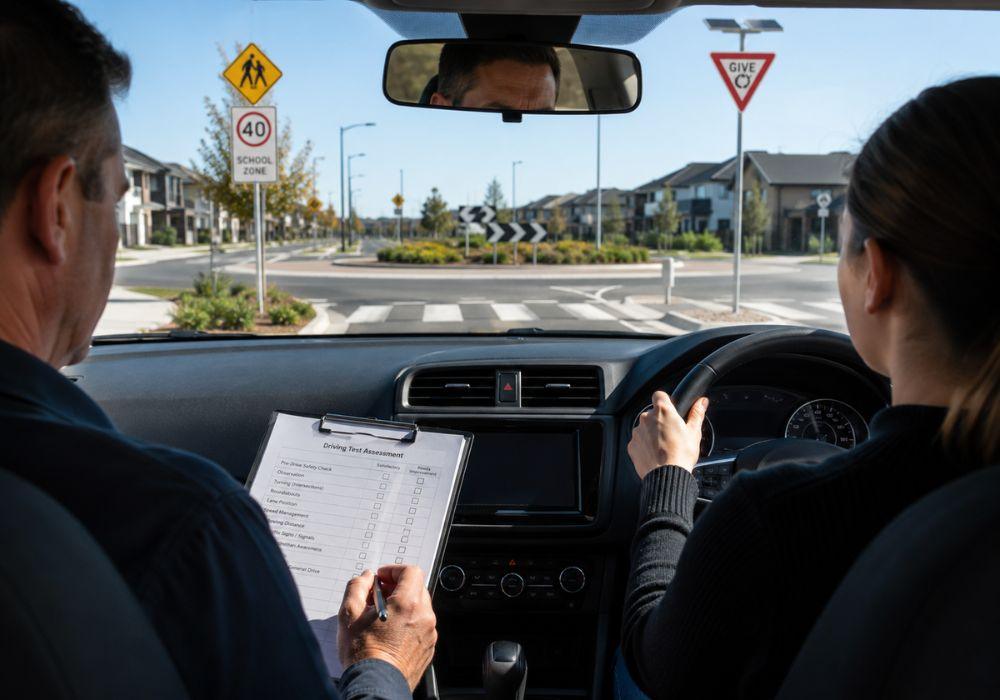
Driving Test in Clyde North Involves
The practical test runs for 30 to 45 minutes and departs from the VicRoads Cranbourne Customer Service Centre on High Street.
Expect a genuine mix of road types on the day:
- Suburban residential streets at 50km/h
- Active 40km/h school zones
- Roundabout-heavy intersections
- Higher-speed roads reaching 80 to 100km/h
The variety is the challenge. Knowing it’s coming before test day already puts you ahead.
What You're Being Assessed On
The Core Skills
The test covers observation and hazard awareness at intersections, speed management across different zones, roundabout entry and exit, give way rules at T-intersections, lane discipline on multi-lane roads, reverse parking, three-point turns, and smooth controlled braking throughout.
One thing that surprises many learners is that the examiner is watching confidence as much as technical skill.
Hesitating for too long when you clearly have the right of way signals you’re not reading traffic flow properly. But rushing an unsafe gap is just as bad.
Your Logbook Must Be Complete
Before sitting the test, you need a minimum of 120 logged hours of supervised driving, including at least 20 hours at night. This is a non-negotiable VicRoads requirement. Each session must be signed by your supervising driver on the day it happens.
One situation that regularly catches learners out is arriving on test day with an incorrectly signed logbook or one that’s a few hours short. The examiner won’t proceed, and the booking fee won’t be refunded.
Instructor Tip
We’ve seen learners lose their booking simply because a session wasn’t signed off on the day it happened. We always tell learners to get the logbook signed immediately after every drive, not days later. Memory fades, and fixing errors close to test day is harder than it sounds.
How to Book Your Driving Test
Booking is done through the VicRoads website or by calling them directly. You’ll need your learner’s permit and a completed logbook before you confirm anything.
The drive test fee is currently $51.80, plus a $21.50 appointment fee. Check the current amount at VicRoads before booking, as fees do change. Cancelling within 48 hours of your test usually means you forfeit the fee.
Because Clyde North is a high-growth suburb, test slots at Cranbourne fill up quickly.
Instructor Tip
We recommend booking three to four weeks ahead. Don’t wait until you feel completely ready. Set a date, then use your remaining practice time to work toward it. A fixed deadline changes how seriously learners prepare, and it shows on test day.
Preparing for the Clyde North Roads
Practise Where It Actually Matters
The roads around Clyde North include Clyde Road, Pattersons Road, and Berwick-Cranbourne Road. These are the kinds of roads that appear on Cranbourne test routes regularly. Residential streets feed into busier main roads, and the transitions between speed zones require real attention.
A common problem: learners who’ve done all their hours in quiet streets arrive for a Cranbourne test and find the higher-speed sections feel completely foreign. Practise where the test actually happens.
School Zones Require a Specific Reflex
In Victoria, school zones operate at 40km/h between 8:00 am and 9:30 am, and again between 2:30 pm and 4:00 pm, on school days. Knowing the rule is not the same as having the reflex built in.
Learners who haven’t driven through active school zones regularly tend to slow down too late, because they’re thinking about it rather than doing it automatically.
Instructor Tip
We schedule lessons to overlap with school zone hours deliberately. If your practice drives only happen on weekends at 10 am, you’re missing the reflex entirely. We build the habit by making sure learners are in those zones when the 40km/h limit is actually active.
What the Examiner Is Watching For
Two things examiners notice immediately: where your eyes are going, and whether your head is physically moving.
Mirror checks are a top failure category in Victoria. The most common mistake isn’t skipping them altogether. It’s checking mirrors after you’ve already started a manoeuvre rather than before. Mirrors before braking. Mirrors before a lane change. Mirrors before pulling from the kerb. Always before.
Blind spot checks are separate from mirrors. A subtle eye flick won’t count. The examiner needs to see your head turn clearly. If they can’t see it from where they’re sitting, it gets marked as not performed.
Instructor Tip
We tell learners to make head checks obvious, not theatrical. Turn clearly enough that a passenger sitting next to you would notice it. If you’re worried you’re overdoing it, you’re probably getting it right.
Common Mistakes That Fail Clyde North Learners
- Rolling stops. The car must fully stop at a stop sign. Slowing to near-zero and rolling through is an immediate fail, and most learners don’t even realise they’re doing it.
- Roundabout give-way errors. In Victoria, you give way to any vehicle already in the roundabout. ‘Give way to the right’ is not the rule; you’re giving way to vehicles already circulating, which in most cases will be on your right, but not always.
- Late mirror checks. Checking mirrors after you’ve started braking or turning doesn’t count. The sequence matters.
- Invisible blind spot checks. A subtle glance isn’t enough. The head needs to move visibly.
- Speed confusion on higher-speed roads. Sections near the South Gippsland Highway reach 80 to 100km/h. Learners who have only ever practised on quiet suburban streets often struggle here when nerves are already running high.
How We Help Learners in Clyde North Get Test-Ready
Lessons Built Around the Roads Your Test Uses
Packaged Driving School lessons are built around the Cranbourne test route. Roundabouts, school zones, and speed transitions between residential and main roads are all practised where it counts.
Targeted at What's Actually Holding You Back
We work with learners at different stages, including those close to their test date who need honest, specific feedback rather than more general hours behind the wheel. If a learner’s mirror habits are the issue, that’s what we focus on. If roundabout hesitation is costing them, we fix the hesitation.
If you’re close to your test date, targeted feedback will do more for you than another 10 hours of unstructured practice.
A Clear Plan
Our professional driving lesson packages are structured so learners know exactly what they’re getting and why. Pre-test sessions are particularly useful for people who feel comfortable on familiar roads but want to build real confidence on the actual Cranbourne test route before the day itself.
FAQs About the Driving Test in Clyde North
Do I need to pass the Hazard Perception Test before I can book my drive test?
Yes. In Victoria, you must pass the Hazard Perception Test before you’re eligible to sit the practical driving test. It can be completed online for free, so sort it well before you plan to book your test date.
Can I use my driving instructor’s car to sit the test at Cranbourne?
Yes, and for many learners this is the smarter choice. Packaged Driving School instructor picks you up before your test, gives you time to warm up on the actual route, and lets you sit the test in a familiar, dual-control vehicle you’ve already practised in.
Should I go for an automatic or manual licence?
If you plan to drive a manual car, get tested in one, as a licence obtained in an automatic restricts you to automatic vehicles during your probationary period. If you have no strong reason to go manual, automatic is simpler and means less to manage on an already stressful test day.
If you’re genuinely unsure where your driving stands right now, a pre-test lesson with clear feedback will tell you more than any amount of self-assessment.
DRIVING TEST & DRIVING LESSON PACKAGES
PLANS & PRICING
Great last minute appointment.
Great last minute appointment. Would definitely recommend for a driving instructor!  Great advice and a very nice humble person.

TONY SPAULL
Learnt a lot of new things that helped me during my driving test.
I had an amazing experience with my driving instructor. Learnt a lot of new things that helped me during my driving test. Very thankful

UROOBA MALIK
Great instructor.
Great instructor. Very friendly. I would highly recommend this one.
