
Driving Test Frankston : Roads, Routes & What Examiners Watch
The Frankston driving test catches more learners off guard than it should. Not because it’s unusually hard, but because most people prepare for a generic test instead of this one.
Here’s what the assessment actually covers, where candidates consistently go wrong, and how to show up ready on the day.
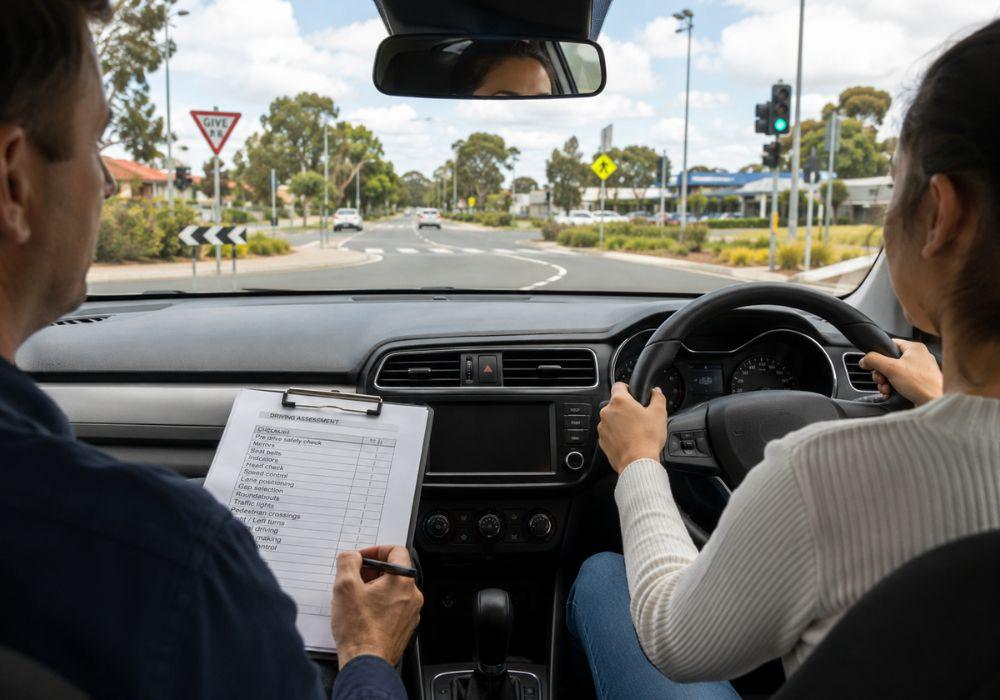
What is the Frankston Driving Test
The Frankston driving test is a two-stage on-road assessment run by VicRoads. Stage 1 takes about 10 minutes and Stage 2 takes about 20 minutes, so the full drive test usually lasts about 30 minutes.
Stage 1 checks safer driving in lower-risk traffic conditions and includes one low-speed parking task, such as a reverse parallel park or a three-point turn. If you pass Stage 1, you move on to Stage 2, which takes place in heavier traffic and tests your ability to handle normal driving tasks safely.
What the Test Assesses
Skill Area | What the Examiner Watches |
Observations | Mirrors, blind spots, and head checks at every intersection |
Roundabout handling | Give way, lane choice, signalling left on exit |
Speed management | Reaching the limit promptly, not crawling |
Parking | Parallel park or three-point turn in Stage 1 |
Lane discipline | Positioning, merging, and multi-lane road handling |
Responding to hazards | Early identification, appropriate speed reduction, and giving space to pedestrians and cyclists |
How to Book Your Driving Test in Frankston
Booking goes through the VicRoads website or by calling 13 11 71. Select Frankston as your test centre and choose a time slot. Morning slots fill faster, so if you want a mid-week morning, book four to six weeks ahead.
The current cost to book your test is $73.60 in total, which covers the $52.10 drive test fee and a $21.50 appointment fee. Keep in mind that if you need to rebook after a failed attempt, both the appointment and test fees will apply again to secure a new time slot.
You need your logbook showing 120 hours of supervised driving, including 20 hours at night, if you are under 25. Make sure every entry is fully completed and signed by your supervising driver in both the learner and supervisor sections.
A common reason for cancellation on test day is an incomplete logbook that no one caught until then.
Our Tip
We always tell learners to check their logbook thoroughly at least a week before the test, not the night before. If entries are missing or unsigned, you have time to sort it out. Showing up on test day with an incomplete logbook means an automatic cancellation, and you still lose the booking fee.
Getting Ready for the Frankston Test
Practise the Actual Roads
Frankston’s routes use roads around Hartnett Drive, Seaford Road, and the residential grid near Emanuel Drive and Lucas Crescent. Some routes cover up to 19 give-way intersections and two school zones, including near Downs Road and Seaford Road. You need a head check at every single one.
A learner with 80 hours of practice in an unfamiliar suburb will likely struggle more than someone with fewer hours but real familiarity with Frankston’s roads.
Our Tip
We recommend at least two or three dedicated practice sessions specifically on the roads around the Frankston Customer Service Centre before your test. Not for the hours, but for the familiarity. Knowing where the school zones are and when they apply is something you can only build through actual time on those streets.
Know Your Car Before You Arrive
Many learners fail before they even pull out of the car park. If you bring your own car, the examiner will inspect it before the test starts. A car with an electronic park brake cannot be used. The examiner also needs to see the full speedometer from the passenger seat.
Before you leave home, check your wipers, lights, brake lights, tyre condition, and washer bottle. You may also be asked basic questions about your vehicle. Stumbling on these looks poor and sets a nervous tone.
Our Tip
We’ve seen learners show up in a parent’s car with an electronic park brake and get turned away immediately. If you are unsure whether your car is approved, use your instructor’s vehicle. It removes that risk entirely, and the controls are already adjusted for a learner, not an experienced driver.
Parallel Parking Is Worth Dedicated Practice
It is one of the most common fail points in Stage 1. The issue is not that people do not know how to do it. It is that they practise it until they can do it, not until they cannot get it wrong.
Our Tip
We tell learners to practise parallel parking until it stops requiring active thought. When you are counting steps or coaching yourself through it during the test, you are already at a disadvantage. It should feel automatic.
What the Examiner Is Actually Looking For
- Give-way at roundabouts: Roundabout give-way is one of the most common fail points for Victorian learners. Vehicles already in the roundabout have the right of way. Signal left as you pass the exit before yours.
- Full stop at stop signs: Wheels must completely stop. A slow roll-through is an immediate fail, no exceptions.
- Building speed promptly: Entering an 80 km/h zone and sitting at 50 km/h tells the examiner you are not reading the road confidently.
- Genuine head checks: Examiners know the difference between a mechanical glance and a real observation. If what you see does not change what you do next, it does not count.
- Consistent observations: Mirrors and blind spots at every turn, every lane change, every intersection. Not most of them, every single one.
Common Mistakes at the Frankston Driving Test
Not completing a full stop at stop signs. A slow roll-through is an immediate termination. Stop behind the line, then inch forward if your view is blocked.
Wrong lane on roundabout entry. If you are turning right, you need the right lane. Entering the roundabout from the wrong lane is both a fail reason and genuinely dangerous.
Driving too slowly without a reason. Sitting at 40 km/h in a 60 km/h zone when conditions are clear tells the examiner you are not confident or not reading the road correctly.
Missing the school zone speed limit. Two school zones appear on some Frankston routes. If your test is during school hours on a school day, you need to be at 40 km/h in those zones. Know where they are before you get there.
Our Tip
We tell every learner the same thing about mistakes during the test. If something goes wrong, keep driving. One minor error does not end your test. Panicking after a mistake, hesitating, or fixating on what just happened is what leads to more errors. Reset and keep going.
How Packaged Driving School Helps Frankston Learners
Clocking up logbook hours with a parent or guardian is valuable for building confidence. But it also means picking up habits that nobody notices anymore because everyone in the car has normalised them.
Packaged Driving School offers structured lessons built around what VicRoads examiners actually assess, not just general driving experience. Their instructors know the Frankston routes, understand where learners consistently make errors on those specific roads, and can give you honest, direct feedback on what needs work before your test date.
A lesson aimed at the test fixes the habits that cost marks. Supervised hours to build experience. Both matter, but they serve different purposes.
FAQs About the Frankston Driving Test
Do professional driving lessons count toward my 120 logbook hours?
Yes. In Victoria, each hour of professional instruction with a registered driving school counts as three logbook hours, up to a maximum of 10 professional hours. That means 10 lessons can contribute up to 30 hours toward your required 120, which is a practical reason to book lessons early rather than leaving them until just before your test.
How many lessons should I book before my Frankston test?
Most learners in Victoria need between 10 and 20 professional lessons, depending on their starting confidence and how much private practice they’ve done. A few lessons before your test date are useful even if you feel ready, since an instructor will catch habits that family members in the car have likely stopped noticing.
Can I request lessons on the actual Frankston test routes?
Yes, and we strongly recommend it. Packaged Driving School lessons can be structured around the roads the examiner is likely to use, including the give-way intersections near Emanuel Drive and the school zones on Seaford Road and Downs Road. Knowing a road before test day is a real advantage, not just a comfort.
If your test date is set, the best use of your remaining time is getting at least one lesson on the actual Frankston roads with a qualified instructor. Not to practise in general, but to get an honest, clear read on where you stand before the examiner makes that call.
DRIVING TEST & DRIVING LESSON PACKAGES
PLANS & PRICING
Great last minute appointment.
Great last minute appointment. Would definitely recommend for a driving instructor!  Great advice and a very nice humble person.

TONY SPAULL
Learnt a lot of new things that helped me during my driving test.
I had an amazing experience with my driving instructor. Learnt a lot of new things that helped me during my driving test. Very thankful

UROOBA MALIK
Great instructor.
Great instructor. Very friendly. I would highly recommend this one.
